 90%
 75%
 USA
 Canada
 Australia
 UK
How to Make Money Playing Blackjack


Wondering how to make money playing blackjack? A profitable session is possible, although blackjack isn’t a reliable source of income. Basic strategy helps reduce the house edge and avoid costly mistakes, giving you a better chance of making the right decisions. Even with perfect play, the casino retains a mathematical advantage over time.
Some skilled players use advanced techniques like card counting to gain an edge in certain games. This guide shows you how these strategies work, what affects your chances of success, and how realistic it is to earn consistent profits from blackjack.
Can You Make Money Playing Blackjack Online?
Yes, you can make money playing blackjack online during individual sessions, although consistent profits are much harder to achieve. Basic strategy helps reduce the house edge by identifying the mathematically correct move for each situation, which is known as perfect play. However, even with perfect play, most blackjack games still favor the casino over the long run.
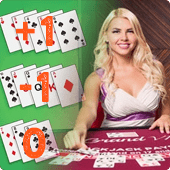
Card counting also offers little practical value at online casinos. Most RNG blackjack games reshuffle the virtual deck after every hand, which makes it impossible to gain an advantage by tracking which cards have previously been dealt. Live dealer blackjack uses physical cards, but the cards are shuffled so frequently that it makes effective card counting difficult. Some tables also use continuous shuffling machines, making counting cards even harder.
For most online players, blackjack is best treated as entertainment rather than a source of income. Set a budget before you play, understand the odds, and never rely on future wins to recover losses.
How Do You Consistently Win at Blackjack?
There’s no guaranteed way to win consistently at blackjack, even though basic strategy reduces the house edge to around 0.5% under favorable rules. The odds still favor the casino over time, and short-term results can vary considerably.
Learning the correct moves, choosing favorable table rules, and setting a clear bankroll limit can help you avoid costly mistakes, though none of these approaches guarantees a profit. Unlike many other casino games, the blackjack house edge changes according to the rules and decisions made during play. A player who follows basic strategy can achieve better long-term odds than someone who relies on instinct or guesses when to take another card.
Even skilled players experience losing streaks, and casino rules are purposely designed to limit opportunities to gain an advantage. Consistent profits generally require favorable conditions that basic strategy alone cannot provide. For most players, the more realistic goal is to reduce avoidable losses, make informed decisions, and treat playing blackjack as a fun activity rather than a way to make money.
How Blackjack Odds Compare Against Other Casino Games
Blackjack can have a house edge of around 0.5% with optimal basic strategy and favorable rules, compared with 2.7% for European roulette and 5.26% for American roulette. That makes blackjack one of the better casino games for players who want to reduce the casino’s mathematical advantage.
Your actual odds depend on the blackjack rules and how accurately you follow basic strategy. The number of decks, dealer rules, and blackjack payouts all affect the house edge. The house edge represents the average percentage of each wager a casino expects to retain over time. For example, a game with a 0.5% house edge has an expected loss of $0.50 for every $100 wagered over a large number of hands, and both short- and long-term sessions can produce much larger wins or losses.
Blackjack also differs from roulette and most slots because the composition of the remaining deck changes as cards are dealt. A higher proportion of Aces and 10-value cards can sometimes improve the player’s mathematical position, though the number of decks used and how often cards are shuffled can also affect the odds.
What Blackjack Rules Should You Look For? (3:2 vs. 6:5)
Blackjack tables that pay 3:2 award $15 in winnings for a $10 natural blackjack, compared with $12 at a 6:5 table. That difference might seem small, but it has a significant effect on how much players can expect to lose by playing hands over a long period of time.
A 6:5 payout increases the house edge by approximately 1.39% compared with 3:2 when all other rules remain equal. For example, a game with a 0.5% house edge under 3:2 rules would have an edge of roughly 1.9% if the payout changed to 6:5.
Other blackjack rules also influence your odds. Look for tables where the dealer stands on soft 17, since that generally favors players compared with games where the dealer must hit. The ability to double down after splitting a pair is another useful feature that’s not always available.
Deck count matters too. Under otherwise identical rules, a two-deck blackjack game can have a house edge of around 0.34%, compared with 0.55% for six decks and 0.58% for eight decks. However, a 6:5 blackjack payout adds approximately 1.39 percentage points to the house edge, potentially making a single-deck game less favorable than a six-deck table that pays 3:2.
Before you play online blackjack, check the rules or information screen to confirm the payout ratio, dealer actions, and permitted moves, since these details make a measurable difference to the house edge.
Does Blackjack Strategy Help to Win Hands?
Yes, blackjack basic strategy can help you make better decisions on hands such as hard 17 or a pair of 8s, based on the dealer’s visible card. It doesn’t guarantee you’ll win every hand, however. Each recommendation comes from mathematical probabilities rather than guesswork, which potentially helps reduce the amount you can expect to lose over time.
Basic strategy covers when to hit, stand, double down, split, or surrender. It provides a solid foundation for blackjack players, although even perfect decisions won’t prevent losing hands or sessions. Following basic strategy won’t change the cards you’re dealt or eliminate the house edge. Its main benefit is reducing the cost of mistakes that can make blackjack considerably less favorable.
One advantage of blackjack is that most situations have a mathematically preferred move. Once you become familiar with the common scenarios, you can make decisions more confidently without relying on hunches.
Here are some blackjack tips and tricks for beginners:
- Stand on Hard 17: A hard 17 doesn’t contain an Ace counted as 11. Taking another card carries a substantial risk of busting, so basic strategy recommends standing.
- Hit or Double on Soft 17: With an Ace and a 6, your total can change without an immediate risk of busting. Doubling is often the best choice against dealer cards 3–6, depending on the rules, while other situations typically call for a hit.
- Stand on 13–16 Against Dealer 2–6: These totals generally favor standing against weaker dealer cards. Stronger dealer cards usually require a different approach, with surrender sometimes preferable when available.
- Split Pairs of 8s: Two 8s give you a hard 16, one of blackjack’s weakest totals. Splitting creates two separate hands and generally improves your expected return.
- Keep Pairs of 10s Together: A total of 20 is already a strong hand. Splitting 10s usually reduces your expected return under basic strategy.
The correct decisions depend on the blackjack variation and its rules, so a strategy chart that matches your table’s rules is a useful reference. It also helps to practice with free games so you can get comfortable playing before you risk your own money.
Can You Count Cards in Blackjack?
Card counting is possible in shoe-dealt blackjack, with systems like Hi-Lo assigning +1 to cards 2–6 and −1 to cards worth 10 or an Ace. Players use these values to estimate whether the remaining cards in the deck favor them or the dealer.
The technique is far less practical online. Most RNG blackjack games reshuffle after each hand, which removes the value of previous counts. Live-dealer tables use physical cards, although frequent shuffles and limited deck penetration often make it difficult to gain an advantage.
Card counting works by tracking the balance of high and low cards left in a shoe. When more low cards have already appeared, the remaining cards may become more favorable to the player. Skilled counters use this information to adjust their bets when the mathematical conditions improve.
A positive running count doesn’t automatically mean you have an advantage. Players also need to account for the number of decks remaining, often through a calculation known as the true count.
Even when the conditions are favorable, card counting requires considerable practice and doesn’t guarantee a profit. Short-term losses remain possible, and casinos can restrict or refuse play to suspected card counters.
Does Card Counting Work at Online Casinos?
Card counting generally doesn’t work in RNG blackjack because most online games use a freshly shuffled virtual deck for every hand. The cards from previous rounds don’t affect what happens in the future and don’t provide useful information about what comes next.
Live dealer blackjack offers a potential exception because the dealer handles physical cards. If a table uses a shoe that retains dealt cards until the next shuffle, tracking the remaining cards is theoretically possible. However, many live dealer games reshuffle before enough cards have been dealt to create a meaningful advantage. Some also use continuous shuffling machines, which prevent players from maintaining a useful count across rounds.
As a result, card counting offers limited practical value for most online blackjack players.
Is Card Counting Illegal?
No, card counting isn’t generally illegal in the U.S. when you rely solely on your memory and mental calculations without additional assistance from technology. Casinos can still take action if they suspect you’re counting cards, including asking you to leave or refusing to let you play blackjack.
The rules change when electronic devices or software enter the picture. Nevada, for example, prohibits players from using devices that track cards or calculate an advantage during casino games. If you’re caught, you can potentially face a lifetime ban from the casino or even felony charges. Other jurisdictions have their own gambling laws, so it’s important to always check local regulations if you’re considering attempting to count cards.
Online casinos also have their own rules against advantage play and unauthorized software, and they vary from site to site. Violations can lead to account restrictions or closures, even when the activity doesn’t constitute a criminal offense.
How to Make $100 a Day Playing Blackjack
Making $100 from a single blackjack session is possible, although earning that amount every day isn’t a realistic expectation for most players. Even with a house edge of just 0.5%, basic strategy alone never provides a mathematical advantage over the casino.
Larger bets can increase the chances of substantial short-term wins, along with the risk of equally significant losses. Understanding how bet sizes affect your results helps explain why a $100 daily profit is far from guaranteed.
Consider a standard blackjack game with six decks, a 3:2 payout, and a dealer who stands on soft 17. Under favorable conditions, basic strategy can keep the house edge near 0.5%.
The following examples show how expected losses increase as you raise your bets over 300 hands. Keep in mind that these figures represent long-term mathematical averages rather than predictions for individual sessions.
| Hands Played | Bet Size | House Edge | Total Initial Wagers | Expected Loss |
|---|---|---|---|---|
| 300 | $10 | 0.5% | $3,000 | $15 |
| 300 | $25 | 0.5% | $7,500 | $37.50 |
| 300 | $50 | 0.5% | $15,000 | $75 |
| 300 | $100 | 0.5% | $30,000 | $150 |
Making Money Playing Blackjack FAQs
Very few people make a living playing blackjack. Those who do usually rely on card counting at favorable shoe games, large bankrolls, and years of practice. They still face long losing streaks and casino restrictions.
The house makes money because you act before the dealer. If you bust, you lose your bet even if the dealer busts later. That built-in advantage outweighs the 3:2 payout and other player-friendly options like doubling down.
Flat betting is the most practical approach for most players, which is where you wager the same amount on every hand. Progressive systems like the Martingale or 1-3-2-6 can change your short-term swings but can’t overcome the house edge.
No, basic strategy recommends declining insurance. The side bet pays 2:1 if the dealer has blackjack, but the odds of that happening are worse than the payout suggests. That gives insurance a high house edge for non-counters.
More Advice to Profit from Playing Blackjack
Blackjack rules can make a significant difference to your odds, particularly when a natural blackjack pays 3:2 rather than 6:5. Choosing tables with favorable rules and following basic strategy can help keep the house edge as low as possible.
It’s equally important to set limits on how much money and time you spend at the table. Blackjack can produce profitable sessions, although even experienced players face losses. Treating the game as entertainment rather than a dependable income source helps keep those risks in perspective. Our responsible gambling guide offers more advice on safer play.


